Notice for Family Members
If you are reading this because you are worried about a parent or loved one, understand that confronting them directly often causes them to defend the scammer. Victims are highly manipulated and isolated. Professional intervention or forensic proof is often required.
The Evolution of Romance Scams
Historically, romance scams were straightforward, albeit devastating. A scammer would build a relationship online, eventually fabricate an emergency—a medical bill, a seized passport, a legal fee—and ask the victim to wire them money via Western Union. Once the money was sent, the scammer vanished.
The modern "Relationship Crypto Scam" is vastly more sophisticated, lucrative, and psychologically destructive. Instead of asking for money for an emergency, the scammer presents an opportunity for mutual wealth. They don't ask you to send money to them; they ask you to deposit money into your own account on an investment platform. This brilliantly bypasses the traditional red flags of romance fraud.
The Psychological Blueprint
These scams are not executed by lone individuals in basements. They are operated by massive, highly organized transnational criminal syndicates, primarily operating out of specialized compounds in Southeast Asia.
The individuals communicating with victims are often working from highly refined psychological scripts. They are given quotas, continuous training on manipulation tactics, and they work in shifts to provide 24/7 responsiveness to the victim. The goal is to monopolize the victim's attention and isolate them from the skeptical opinions of friends and family.
Phase 1: The Grooming Phase
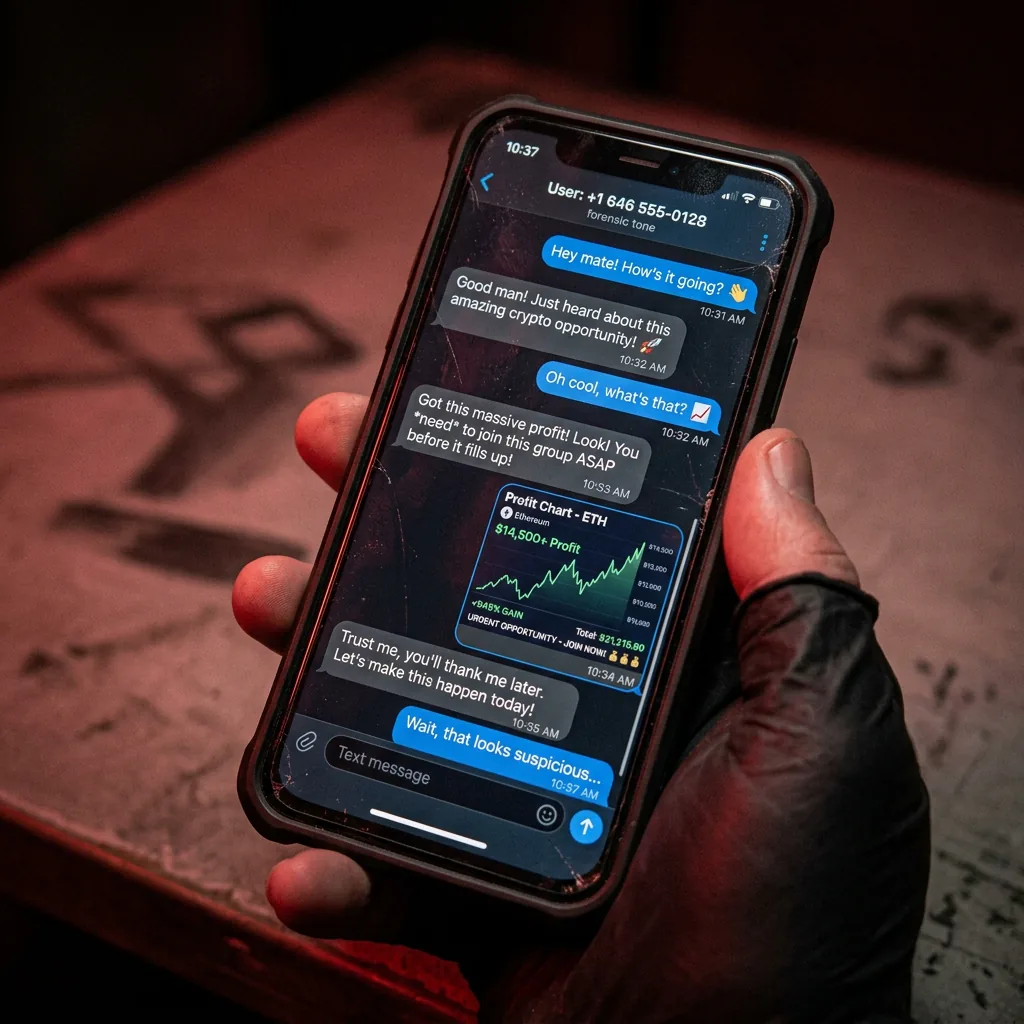
The initial contact can happen anywhere: a right swipe on Tinder, a LinkedIn connection request, a direct message on Instagram, or increasingly, a "wrong number" text message ("Hi Anna, are we still meeting for golf today?").
When the victim replies ("Sorry, wrong number"), the scammer is endlessly polite and strikes up a conversation. They quickly attempt to move the conversation to an encrypted messaging app like WhatsApp, Telegram, or Line.
The grooming phase can last for weeks or even months. The scammer builds a detailed profile of a highly successful, attractive, and wealthy individual. They share photos of luxury cars, fine dining, and exotic travel. They are attentive, empathetic, and quickly establish deep emotional rapport. Crucially, they will always find excuses to avoid video calls or meeting in person, claiming broken cameras, demanding travel schedules, or past trauma.
Phase 2: The Investment Pivot
Once absolute trust is established, the scammer introduces the "hook." They casually mention how much money they've made that day trading cryptocurrency, gold options, or foreign exchange. They don't press the issue immediately; they wait for the victim to ask questions.
When the victim shows interest, the scammer generously offers to "teach" them. They guide the victim to download legitimate apps (like Crypto.com or Coinbase) to buy cryptocurrency, which builds a false sense of security.
Then, the fatal step: The scammer provides a link to a "VIP trading platform" or a "specialized DeFi node" and instructs the victim to transfer their cryptocurrency there. This platform is entirely controlled by the syndicate. It is a simulation.
Initially, the scammer will help the victim execute a few trades, and the platform will show massive profits. The scammer will even encourage the victim to withdraw a small amount of money to prove that the platform is legitimate. This engineered "successful withdrawal" is the psychological kill shot. Convinced the platform is real, the victim begins liquidating savings accounts, taking out loans, and remortgaging homes to deposit more funds.
Phase 3: The 'Slaughter'
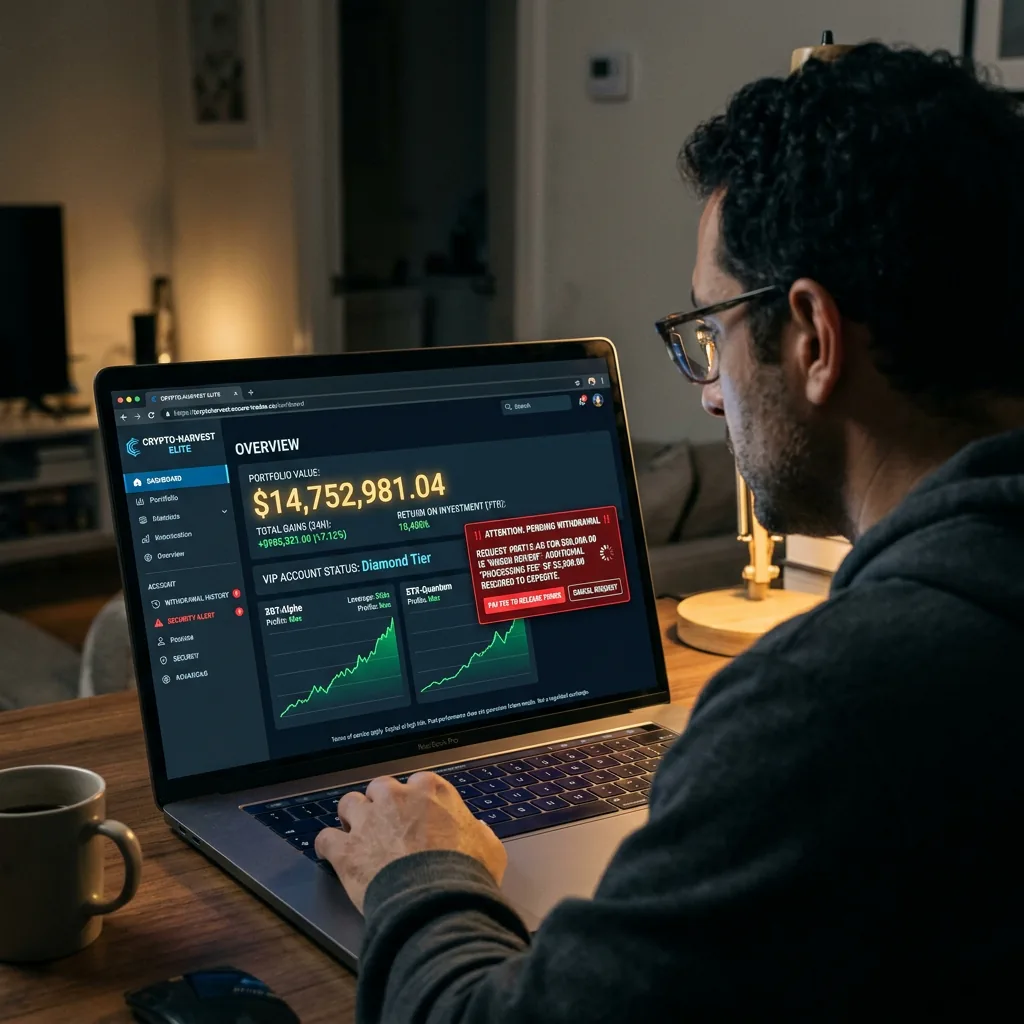
The final phase occurs when the victim attempts to withdraw a large sum of money, or when they tell the scammer they have absolutely no more capital to invest.
The withdrawal request is denied. The "customer service" department of the fake platform will contact the victim, claiming that they must pay a 20% "capital gains tax," an "account unfreezing fee," or an "AML clearance deposit" before the funds can be released. The scammer will feign shock and anger, but will ultimately urge the victim to pay the fee to get their money out, sometimes even offering to "loan" them a portion of the fee to prove their loyalty.
If the victim pays the fee, a new fee is invented. This extortion cycle continues until the victim is completely drained. Once the syndicate realizes no more money can be extracted, the scammer blocks the victim, the website goes offline, and the money is gone.
How to Spot a Fake Profile
Identifying a relationship crypto scam early requires extreme vigilance and a willingness to verify claims independently:
- Reverse Image Search: Take their profile pictures and run them through Google Images, Yandex, and TinEye. Scammers steal photos of legitimate models, influencers, or professionals.
- The Refusal to Video Chat: If someone claims to be deeply in love with you but cannot manage a 30-second FaceTime or Zoom call, you are speaking to a scammer. There are no exceptions to this rule.
- The Unsolicited Finance Pitch: A legitimate romantic partner will not aggressively push you to invest your life savings into an obscure crypto platform they just happen to be an expert in.
What to Do If You're Involved
If you recognize these patterns in a relationship you or a loved one is currently engaged in, you must act immediately but carefully.
Do not confront the scammer immediately; they will delete their account and destroy evidence. First, quietly take screenshots of all conversations, profile pictures, phone numbers, and the URLs of the trading platform. Export your transaction history from your legitimate exchange (like Coinbase) showing exactly where you sent your cryptocurrency.
Once the evidence is secured, cut off all contact. Do not send another cent to pay for "taxes" or "withdrawal fees." Seek professional assistance to evaluate the digital evidence and determine if a forensic trace is viable.